Esther Payeleon didn’t have shoes, but that didn’t stop her from being the fastest runner and best kicker on the girls’ kickball team. Esther was a sixth grader at Dolokelen Paye Elementary and Junior High School in Foequellie, Upper Bong County, Liberia, when I was a teacher there in 1976. Peace Corps sent me to that small town to teach Language Arts to seventh and eighth graders. Nowhere in any job description had I seen anything about coaching. I was conscripted anyway by the girls’ team in spite of my honest protests that I had zero athletic ability.
One day a group of girls arrived at my door after the school day was over.
“Bock, bock,” one of them yelled through the screen. No one in Foequellie ever knocked on a door, perhaps because most people didn’t have doors. This was how they announced their presence.
“Miss Vicki, dat girls’ football team from over to Ganta be reaching here next week.” From this they launched into their tale of woe. Principal Karpee, only recently returned from his accidental induction into the secret Bush School when he walked into the wrong part of the forest, insisted they could not represent the school in a competition unless they had a faculty sponsor as their team coach. No one else seemed available. So it was me or no one. Looking into those begging and beautiful faces, I couldn’t let them down.
And Mr. Karpee made it even harder. They could not compete unless all the girls had shoes to wear. This was much harder than talking me into coaching. Most locals were subsistence farmers who trekked out to their farms by day and back into town at night to cook, eat, and sleep. Many of them did not have their own shoes.
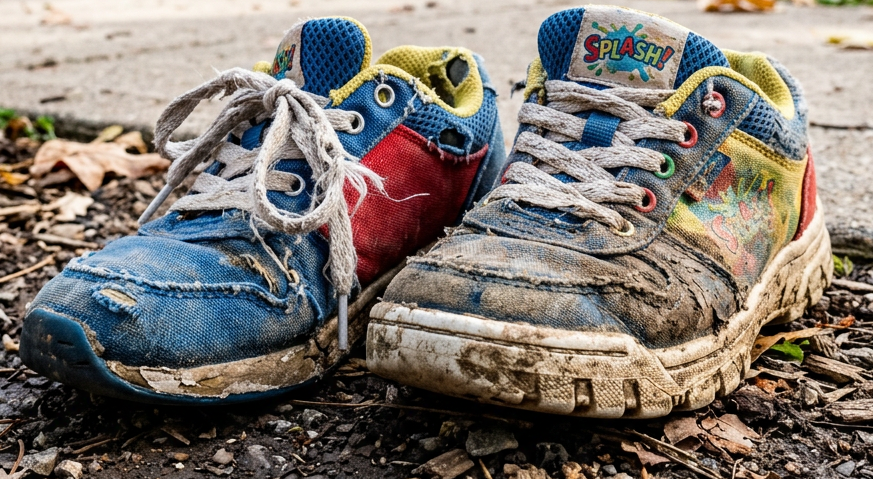
After days of the most intense fundraising (or in this case, shoe-seeking) I ever witnessed in all my years of teaching, a committee of kickball girls had talked our local Lebanese merchant, Fawaz, into donating a few pairs of shoes. The shoes were somewhat used but it didn’t matter. Esther got one of those pairs of shoes. Our star player was eligible to go out on the field so we could beat those Ganta girls.
Many of the details of the game are lost to me after all these years. Esther was kicking and running as our side cheered her on. Then at one point, I disagreed with one of the referee’s calls and I was thrown out of the game. Not long after that, the players from both sides ran onto the field and engaged in what we called in Liberia– a Palaver. It was noisy and was starting to get physical, although I don’t think any blood was drawn.
The referee was blowing his whistle, the onlookers were running onto the field, and the Ganta girls decided it was time to retreat. They ran back to their chartered moneybus (a pickup with benches for seating in the bed of the truck under a metal roof) and zoomed out of town. They left before they ate the food we had prepared for them, as was the local custom for visitors. We had a fine feast without them. The referee, who stayed to eat with us, declared that the game had ended “In confusion.”
Esther ran like the wind in her previously-owned shoes. Esther and all of those girls are still with me all these years later. They had so much to teach me. Their hard work to achieve something that seemed almost impossible, their optimism that they could make it happen, and their joy in the process occupy a place in my heart.
I don’t know what happened to any of them after I left the country in 1977. There were two bloody coups and two civil wars of record during the next two decades. Many lives were lost before the country managed to settle into peace. I have to hope and pray that many of my kickball girls grew into young women who managed to survive and find successful lives for themselves. Maybe they even helped their country to heal and move forward. They certainly had the skills to be a part of that.