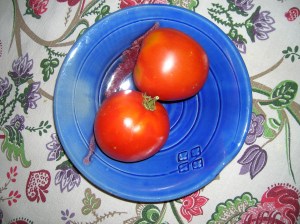
 During my childhood summers in Wisconsin, we bought our tomatoes from the farmer kids who ran their family farm stand outside of Williams Bay. Mom sliced them thin. Dad piled them on his plate and spooned white sugar all over them. I was never sold on the sugar-on-tomatoes thing, but I gave it a try a few times. I preferred my tomatoes on top of the burgers Dad and the uncles cooked over charcoal in the back yard. After a long afternoon down at the lake waiting for a turn to ride on the boat or chasing with other kids at the beach, those burgers were about the best thing I ever tasted. Tomato time every year takes me back to Williams Bay and the farm stand and the smell of burgers on the grill.
Taking a Rest in Deep Creek
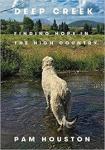 I am reading Pam Houston’s memoir Deep Creek and enjoying a return visit to the high altitude country of her Colorado ranch. No altitude sickness for me in her wonderful writing. The rest from my own manuscript of Altitude Sickness is refreshing. Ideas bubbling beneath the surface and in my notebook pages as I get ready for the next round of revision.
Thoughts on Process
 I appreciate this advice for getting started on an idea, and for working through its early stages. And there is a time when my ruthless inner editor, Cruella, must be called forth. But it is way more complicated than a two-part process for me. When I get to later drafts, oftentimes the writing and the editing become intertwined. This has become more evident to me as I work through this novel manuscript. I saw it when I was a full-time writing teacher, too. We tend to want to simplify this process for students and say, “Ok first write a draft. Then edit.” Not so simple. Yes, write like the blazes when you are getting the idea thrashed out, but understand that revising, editing, polishing are often about finesse and being willing to loop in and out at different stages of the process. There is a finished piece out there somewhere if you’re willing to work through it. I’m convinced.
 Vicki Holmsten